Understanding Flow Meters: Types, Working Principles & Real-World Uses
In almost every industry—from water treatment to oil refineries—knowing how much fluid or gas is flowing through a system is critical. That’s where flow meters come into play.
But here’s the catch: not all flow meters are the same.
Each type is built with a specific purpose, working principle, and ideal application. So if you’re wondering which flow meter is right for your setup—or just want to understand the basics—you’re in the right place.
Let’s break it down in simple terms.
💡 What Is a Flow Meter?
A flow meter is a device used to measure the rate or volume of fluid or gas moving through a pipe. From tracking water usage in a factory to monitoring natural gas in a plant, flow meters help businesses ensure efficiency, accuracy, and safety.
🔍 Types of Flow Meters & How They Work
Here are some of the most common types of flow meters you’ll come across, how they work, and where they shine.
1. Electromagnetic Flow Meter (Magmeter)
How it works:
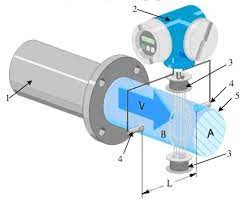
It works on Faraday’s Law of Electromagnetic Induction. When a conductive fluid flows through a magnetic field, it creates a small voltage. That voltage is used to calculate the flow rate.
Best for:
Conductive liquids like wastewater, chemicals, or slurry
Industries like food & beverage, mining, and pharmaceuticals
Why choose it?
No moving parts = less maintenance
Works great with dirty or corrosive fluids
Doesn’t create pressure loss